Burkhalter Law PLLC
Burkhalter Law PLLC
  • BURKHALTER LAW: HOME
  • About Us
  • Contact Us
  • ARTICLES
  • More
    • BURKHALTER LAW: HOME
    • About Us
    • Contact Us
    • ARTICLES
  • BURKHALTER LAW: HOME
  • About Us
  • Contact Us
  • ARTICLES

PROPERTY DIVISION IN A DIVORCE IN WASHINGTON STATE

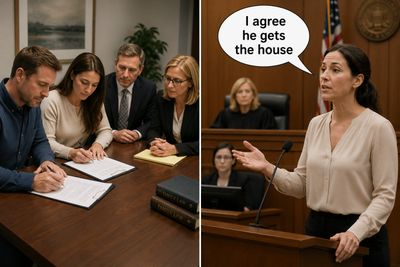
Dividing property during a divorce in Washington State is often one of the most complex and emotionally charged aspect of the divorce process. Washington follows a “community property” system, but in practice, the division is guided by what the court considers “just and equitable”—not necessarily a strict 50/50 split. Understanding how this works can help you approach the process more strategically.


Controlling Law


RCW 26.09.080

Disposition of property and liabilities—Factors.


In a proceeding for dissolution of the marriage or domestic partnership, legal separation, declaration of invalidity, or in a proceeding for disposition of property following dissolution of the marriage or the domestic partnership by a court which lacked personal jurisdiction over the absent spouse or absent domestic partner or lacked jurisdiction to dispose of the property, the court shall, without regard to misconduct, make such disposition of the property and the liabilities of the parties, either community or separate, as shall appear just and equitable after considering all relevant factors including, but not limited to:

(1) The nature and extent of the community property;

(2) The nature and extent of the separate property;

(3) The duration of the marriage or domestic partnership; and

(4) The economic circumstances of each spouse or domestic partner at the time the division of property is to become effective, including the desirability of awarding the family home or the right to live therein for reasonable periods to a spouse or domestic partner with whom the children reside the majority of the time.


Community vs. Separate Property


In Washington, property is generally categorized as either community property or separate property.


  • Community property includes most assets and debts acquired during the marriage or domestic partnership. This can include wages, real estate, retirement accounts, business ownership, and even credit card debt accumulated while married.
  • Separate property refers to assets owned by one spouse before the marriage, as well as gifts or inheritances received individually during the marriage.


However, things aren’t always clear-cut. Separate property can become “commingled” with community property—for example, if one spouse deposits inheritance money into a joint account used for shared expenses. In such cases, determining ownership may require detailed financial tracing.


The “Just and Equitable” Standard


Unlike some states that aim for an equal division, Washington courts focus on fairness. Judges consider several factors, including:

  • The nature and extent of both community and separate property
  • The duration of the marriage
  • Each spouse’s financial situation at the time of divorce
  • The economic circumstances each party will face after the divorce


Because of this, one spouse may receive more than half of the total assets if the court believes it’s fair under the circumstances. For instance, a spouse with lower earning capacity or primary custody of children may be awarded a larger share.


Treatment of Debts


Debt is treated similarly to assets. Debts incurred during the marriage are typically considered community/marital debts, regardless of whose name is on the account. This means both spouses may be responsible for repayment, even after divorce.

Courts may assign responsibility for specific debts to one party, but creditors are not bound by the divorce decree. If a joint debt goes unpaid, a creditor can still pursue either spouse.


Real Estate and the Family Home


The family home is often a central issue. Courts may:

  • Award the home to one spouse (often the one with primary custody of children)
  • Order the home to be sold and proceeds divided
  • Allow one spouse to buy out the other’s sharE


The decision depends on financial feasibility and what best supports stability, especially for children.


Retirement Accounts and Pensions


Retirement assets earned during the marriage are typically considered community property—even if only one spouse’s name is on the account. Dividing these often requires a Qualified Domestic Relations Order (QDRO), which allows funds to be split without early withdrawal penalties.


Impact of Prenuptial and Postnuptial Agreements


If the couple has a valid prenuptial or postnuptial agreement, it can significantly influence how property is divided. Courts generally enforce these agreements as long as they were entered into voluntarily, with full disclosure, and are not unconscionable.


Short vs. Long Marriages


The length of the marriage can affect division outcomes:

  • Short marriages: Courts may try to return each spouse to their financial position before the marriage.
  • Long marriages: Assets and debts are more likely to be divided in a way that equalizes the parties’ financial situations moving forward.


Hidden Assets and Disclosure


Both spouses are legally required to fully disclose all assets and debts. Attempting to hide assets can lead to serious consequences, including court sanctions and an unfavorable division of property.


Negotiation vs. Litigation


Many couples resolve property division through negotiation, mediation, or collaborative divorce rather than going to trial. This can provide more control over the outcome and reduce legal costs. However, if an agreement cannot be reached, the court will decide.


Final Thoughts


Property division in Washington State is less about rigid formulas and more about achieving fairness based on the unique circumstances of each marriage. Because of the flexibility in the law, outcomes can vary widely. Careful documentation, financial transparency—professional legal guidance can make a significant difference in protecting your interests.

SPOUSAL SUPPORT IN A DIVORCE IN WASHINGTON STATE

Spousal support—often called spousal maintenance or alimony—may be a key issue in many Washington State divorces. Unlike child support, which follows a fairly strict formula, spousal support is highly flexible. Courts have broad discretion to decide whether support should be awarded, how much, and for how long, based on what is fair under the circumstances.


What Is Spousal Support?


Spousal support is a financial payment from one spouse to the other during or after a divorce. Its purpose is not to punish one party or reward the other, but to address economic imbalance—especially when one spouse needs time or resources to become financially independent.


In Washington, the legal framework for spousal support is guided by state statute, but there is no fixed formula. Each case is evaluated individually.


Controlling Law


RCW 26.09.090

Maintenance orders for either spouse or either domestic partner—Factors.


(1) In a proceeding for dissolution of marriage or domestic partnership, legal separation, declaration of invalidity, or in a proceeding for maintenance following dissolution of the marriage or domestic partnership by a court which lacked personal jurisdiction over the absent spouse or absent domestic partner, the court may grant a maintenance order for either spouse or either domestic partner. The maintenance order shall be in such amounts and for such periods of time as the court deems just, without regard to misconduct, after considering all relevant factors including but not limited to:


(a) The financial resources of the party seeking maintenance, including separate or community property apportioned to him or her, and his or her ability to meet his or her needs independently, including the extent to which a provision for support of a child living with the party includes a sum for that party;

(b) The time necessary to acquire sufficient education or training to enable the party seeking maintenance to find employment appropriate to his or her skill, interests, style of life, and other attendant circumstances;

(c) The standard of living established during the marriage or domestic partnership;

(d) The duration of the marriage or domestic partnership;

(e) The age, physical and emotional condition, and financial obligations of the spouse or domestic partner seeking maintenance; and

(f) The ability of the spouse or domestic partner from whom maintenance is sought to meet his or her needs and financial obligations while meeting those of the spouse or domestic partner seeking maintenance.


Types of Spousal Support


Washington courts may award different types of support depending on the situation:

  • Temporary support: Paid while the divorce is pending to help maintain financial stability.
  • Short-term (rehabilitative) support: Designed to help a spouse gain education, training, or work experience needed to re-enter the workforce.
  • Long-term support: More common in long marriages, particularly where one spouse may not be able to achieve financial independence due to age, health, or long absence from the workforce.


Factors Courts Consider


Judges in Washington focus on what is “just and equitable,” considering several factors, including:


  • The financial resources of each spouse
  • The standard of living established during the marriage
  • The duration of the marriage or domestic partnership
  • The age, physical condition, and financial obligations of each spouse
  • The time needed for the receiving spouse to acquire education or training
  • The paying spouse’s ability to meet their own needs while paying support


No single factor controls the outcome, and judges weigh them differently depending on the facts of the case.


How Long Does Spousal Support Last?


There is no fixed rule, but general patterns exist:


  • Short marriages (under ~5 years): Support, if awarded, is typically brief.
  • Medium-length marriages (5–25 years): Support may last for a moderate period, often tied to the time needed for the receiving spouse to become self-supporting.
  • Long marriages (25+ years): Courts may award long-term or even indefinite support, especially if one spouse cannot realistically return to the workforce at a comparable level.


Still, these are guidelines—not guarantees.


Amount of Support


Because Washington lacks a strict formula, amounts vary widely. Courts aim to balance the receiving spouse’s need with the paying spouse’s ability to pay. In some counties, informal “rules of thumb” may be used during negotiations (for example, a percentage of income over a set period), but these are not legally binding.


Modification and Termination


Spousal support orders can often be modified if there is a substantial change in circumstances, such as:


  • Job loss or significant income change
  • Serious illness or disability
  • Changes in financial need


Support typically ends when:


  • The court-ordered term expires
  • Either spouse dies
  • The receiving spouse remarries


Tax Considerations


For divorces finalized after 2018, federal law changed how spousal support is taxed. Payments are no longer tax-deductible for the payer, and the recipient does not report them as taxable income. This can affect how support is negotiated.


Agreements Between Spouses


Spouses can agree on spousal support terms through settlement or mediation. Courts generally approve these agreements if they are fair and entered into voluntarily. This approach often provides more predictability than leaving the decision entirely to a judge. Spouses can further agree spousal support in non-modifiable as to the amount paid and for how long. RCW 26.09.070(7).


The Role of Prenuptial Agreements


A valid prenuptial or postnuptial agreement may limit or waive spousal support. However, courts can refuse to enforce such provisions if they are deemed unfair at the time of divorce.


Final Thoughts


Spousal support in Washington State is highly case-specific. The lack of a rigid formula allows courts to tailor outcomes to individual circumstances—but it also makes results less predictable. For anyone navigating divorce, understanding these principles with professional legal can help set realistic expectations and support more informed decisions during negotiations or litigation.

"BEST INTERESTS OF THE CHILD": PARENTING PLANS IN WASHINGTON STATE

In Washington State, parenting plans are a central part of any divorce or separation involving children. Rather than using terms like “custody” and “visitation,” Washington law focuses on creating a detailed, child-centered plan that outlines how parents will share responsibilities and time. The goal is to promote stability, protect the child’s well-being, and encourage meaningful relationships with both parents whenever appropriate. The “best interests of the child” is paramount.


Controlling Law


RCW 26.09.184

Permanent parenting plan.


(1) OBJECTIVES. The objectives of the permanent parenting plan are to:


(a) Provide for the child's physical care;


(b) Maintain the child's emotional stability;


(c) Provide for the child's changing needs as the child grows and matures, in a way that minimizes the need for future modifications to the permanent parenting plan;


(d) Set forth the authority and responsibilities of each parent with respect to the child, consistent with the criteria in RCW  26.09.187and  26.09.191;


(e) Minimize the child's exposure to harmful parental conflict;


(f) Encourage the parents, where appropriate under RCW  26.09.187 and  26.09.191, to meet their responsibilities to their minor children through agreements in the permanent parenting plan, rather than by relying on judicial intervention; and


(g) To otherwise protect the best interests of the child consistent with RCW  26.09.002.


(2) CONTENTS OF THE PERMANENT PARENTING PLAN. The permanent parenting plan shall contain provisions for resolution of future disputes between the parents, allocation of decision-making authority, and residential provisions for the child.


(3) CONSIDERATION IN ESTABLISHING THE PERMANENT PARENTING PLAN. In establishing a permanent parenting plan, the court may consider the cultural heritage and religious beliefs of a child.


(4) DISPUTE RESOLUTION. A process for resolving disputes, other than court action, shall be provided unless precluded or limited by RCW  26.09.187 or 26.09.191. A dispute resolution process may include counseling, mediation, or arbitration by a specified individual or agency, or court action. In the dispute resolution process:

(a) Preference shall be given to carrying out the parenting plan;

(b) The parents shall use the designated process to resolve disputes relating to implementation of the plan, except those related to financial support, unless an emergency exists;


(c) A written record shall be prepared of any agreement reached in counseling or mediation and of each arbitration award and shall be provided to each party;

(d) If the court finds that a parent has used or frustrated the dispute resolution process without good reason, the court shall award attorneys' fees and financial sanctions to the prevailing parent;

(e) The parties have the right of review from the dispute resolution process to the superior court; and

(f) The provisions of (a) through (e) of this subsection shall be set forth in the decree.


(5) ALLOCATION OF DECISION-MAKING AUTHORITY.


(a) The plan shall allocate decision-making authority to one or both parties regarding the children's education, health care, and religious upbringing. The parties may incorporate an agreement related to the care and growth of the child in these specified areas, or in other areas, into their plan, consistent with the criteria in RCW 26.09.187 and  26.09.191. Regardless of the allocation of decision-making in the parenting plan, either parent may make emergency decisions affecting the health or safety of the child.

(b) Each parent may make decisions regarding the day-to-day care and control of the child while the child is residing with that parent.

(c) When mutual decision making is designated but cannot be achieved, the parties shall make a good faith effort to resolve the issue through the dispute resolution process.

(6) RESIDENTIAL PROVISIONS FOR THE CHILD. The plan shall include a residential schedule which designates in which parent's home each minor child shall reside on given days of the year, including provision for holidays, birthdays of family members, vacations, and other special occasions, consistent with the criteria in RCW  26.09.187 and 26.09.191.


(7) PARENTS' OBLIGATION UNAFFECTED. If a parent fails to comply with a provision of a parenting plan or a child support order, the other parent's obligations under the parenting plan or the child support order are not affected. Failure to comply with a provision in a parenting plan or a child support order may result in a finding of contempt of court, under RCW  26.09.160.


(8) PROVISIONS TO BE SET FORTH IN PERMANENT PARENTING PLAN. The permanent parenting plan shall set forth the provisions of subsections (4)(a) through (c), (5)(b) and (c), and (7) of this section.


RCW 26.09.187

Criteria for establishing permanent parenting plan.


(1) DISPUTE RESOLUTION PROCESS. The court shall not order a dispute resolution process, except court action, when it finds that any limiting factor under RCW  26.09.191 or  26.09.192 applies, or when it finds that either parent is unable to afford the cost of the proposed dispute resolution process. If a dispute resolution process is not precluded or limited, then in designating such a process the court shall consider all relevant factors, including:


(a) Differences between the parents that would substantially inhibit their effective participation in any designated process;


(b) The parents' wishes or agreements and, if the parents have entered into agreements, whether the agreements were made knowingly and voluntarily; and


(c) Differences in the parents' financial circumstances that may affect their ability to participate fully in a given dispute resolution process.


(2) ALLOCATION OF DECISION-MAKING AUTHORITY.


(a) AGREEMENTS BETWEEN THE PARTIES. The court shall approve agreements of the parties allocating decision-making authority, or specifying rules in the areas listed in RCW  26.09.184(5)(a), when it finds that:

(i) The agreement is consistent with any limitations on a parent's decision-making authority mandated by RCW  26.09.191 and  26.09.192; and

(ii) The agreement is knowing and voluntary.


(b) SOLE DECISION-MAKING AUTHORITY. The court shall order sole decision-making to one parent when it finds that:

(i) A limitation on the other parent's decision-making authority is mandated by RCW  26.09.191 or  26.09.192;

(ii) Both parents are opposed to mutual decision making;

(iii) One parent is opposed to mutual decision making, and such opposition is reasonable based on the criteria in (c) of this subsection.


(c) MUTUAL DECISION-MAKING AUTHORITY. Except as provided in (a) and (b) of this subsection, the court shall consider the following criteria in allocating decision-making authority:

(i) The existence of a limitation under RCW  26.09.191 or  26.09.192;

(ii) The history of participation of each parent in decision making in each of the areas in RCW  26.09.184(5)(a);

(iii) Whether the parents have a demonstrated ability and desire to cooperate with one another in decision making in each of the areas in RCW  26.09.184(5)(a); and

(iv) The parents' geographic proximity to one another, to the extent that it affects their ability to make timely mutual decisions.


(3) RESIDENTIAL PROVISIONS.


(a) The court shall make residential provisions for each child which encourage each parent to maintain a loving, stable, and nurturing relationship with the child, consistent with the child's developmental level and the family's social and economic circumstances. The child's residential schedule shall be consistent with RCW 26.09.191 and  26.09.192. Where the limitations of RCW  26.09.191 or  26.09.192 are not dispositive of the child's residential schedule, the court shall consider the following factors:


(i) The relative strength, nature, and stability of the child's relationship with each parent;


(ii) The agreements of the parties, provided they were entered into knowingly and voluntarily;


(iii) Each parent's past and potential for future performance of parenting functions as defined in *RCW  26.09.004(2)***, including whether a parent has taken greater responsibility for performing parenting functions relating to the daily needs of the child;


(iv) The emotional needs and developmental level of the child;


(v) The child's relationship with siblings and with other significant adults, as well as the child's involvement with his or her physical surroundings, school, or other significant activities;


(vi) The wishes of the parents and the wishes of a child who is sufficiently mature to express reasoned and independent preferences as to his or her residential schedule; and


(vii) Each parent's employment schedule, and shall make accommodations consistent with those schedules.


Factor (i) shall be given the greatest weight.


(b) Where the limitations of RCW  26.09.191 or  26.09.192 are not dispositive, the court may order that a child frequently alternate his or her residence between the households of the parents for brief and substantially equal intervals of time if such provision is in the best interests of the child. In determining whether such an arrangement is in the best interests of the child, the court may consider the parties geographic proximity to the extent necessary to ensure the ability to share performance of the parenting functions.

(c) For any child, residential provisions may contain any reasonable terms or conditions that facilitate the orderly and meaningful exercise of residential time by a parent, including but not limited to requirements of reasonable notice when residential time will not occur.


***RCW 26.09.004

    Definitions. (Effective until April 1, 2027.)


The definitions in this section apply throughout this chapter.


(2) "Parenting functions" means those aspects of the parent-child relationship in which the parent makes decisions and performs functions necessary for the care and growth of the child. Parenting functions include:


(a) Maintaining a loving, stable, consistent, and nurturing relationship with the child;


(b) Attending to the daily needs of the child, such as feeding, clothing, physical care and grooming, supervision, health care, and day care, and engaging in other activities which are appropriate to the developmental level of the child and that are within the social and economic circumstances of the particular family;


(c) Attending to adequate education for the child, including remedial or other education essential to the best interests of the child;


(d) Assisting the child in developing and maintaining appropriate interpersonal relationships;


(e) Exercising appropriate judgment regarding the child's welfare, consistent with the child's developmental level and the family's social and economic circumstances; and

(f) Providing for the financial support of the child.


(3) "Permanent parenting plan" means a plan for parenting the child, including allocation of parenting functions, which plan is incorporated in any final decree or decree of modification in an action for dissolution of marriage or domestic partnership, declaration of invalidity, or legal separation.


(4) "Temporary parenting plan" means a plan for parenting of the child pending final resolution of any action for dissolution of marriage or domestic partnership, declaration of invalidity, or legal separation which is incorporated in a temporary order.


What Is a Parenting Plan?


A parenting plan is a legally binding document approved by the court that governs how parents will raise their children after separation or divorce. It addresses both residential time (where the child lives) and decision-making authority(who makes important choices about the child’s upbringing).


Washington courts require a parenting plan in all cases involving minor children.


Key Components of a Parenting Plan


A complete parenting plan in Washington typically includes:


1.  Residential Schedule


This outlines where the child will live on a regular basis, including weekdays, weekends, holidays, school breaks, and vacations. Plans can vary widely—from equal time-sharing arrangements to schedules where the child primarily resides with one parent and spends designated time with the other.


2.  Decision-Making Authority


The plan specifies how major decisions will be made regarding the child’s education, health care, and religious upbringing. Courts may order:

  • Joint decision-making, where both parents must agree
  • Sole decision-making, where one parent has authority


3.  Dispute Resolution Process


Most parenting plans include a method for resolving disagreements, such as mediation or arbitration, before returning to court.


The “Best Interests of the Child” Standard


Washington courts base parenting plans on what serves the child’s best interests. One of the most important considerations is the strength, nature, and stability of the child’s relationship with each parent.


Other factors may include:

  • Each parent’s past involvement in caregiving
  • The emotional needs and developmental level of the child
  • Each parent’s ability to cooperate and communicate
  • The child’s relationship with siblings and extended family
  • Any history of domestic violence, abuse, or substance abuse


The court’s primary aim is to create a stable, supportive environment for the child.


Limitations on Parenting Time


In some cases, the court may place restrictions—called limitations—on a parent’s time with the child. These are required if there is evidence of serious issues such as:

  • Domestic violence
  • Child abuse or neglect
  • Substance abuse problems
  • Abandonment


Limitations can range from supervised visitation to reduced residential time, depending on the severity of the concern.


Temporary vs. Final Parenting Plans


During the divorce process, courts may issue a temporary parenting plan to provide structure until the case is finalized. This helps ensure consistency for the child during what can be a disruptive period.


Once the divorce is complete, the court enters a final parenting plan, which remains in effect unless modified.


Modifying a Parenting Plan


Parenting plans are intended to provide stability, so they are not easily changed. To modify a final plan, a parent typically must show a substantial change in circumstances and that the modification is in the child’s best interests.


Examples might include:

  • A parent relocating
  • Significant changes in a parent’s ability to care for the child
  • Concerns about the child’s safety or well-being


Minor adjustments (such as tweaks to scheduling) may be easier to obtain than major changes—major modifications are difficult to obtain absent an uncontemplated substantial change in circumstances since the final parenting plan was ordered.


Relocation of a Parent


If a parent with whom the child primarily resides wants to move, Washington has specific relocation laws. The relocating parent must usually provide formal notice, and the other parent has an opportunity to object. The court will then decide whether the move is allowed based on statutory factors. Court’s are strict with the notification and procedural requirements.


Encouraging Cooperation


Washington law encourages parents to work together in developing a parenting plan. Agreements reached through negotiation or mediation are often more flexible and better tailored to a family’s needs than court-imposed decisions.

However, when cooperation isn’t possible, the court will step in to establish a plan that protects the child’s interests.


Final Thoughts


Parenting plans in Washington State are designed to prioritize children’s stability and well-being during and after divorce in the child’s “best interests”. By focusing on clear schedules, shared responsibilities, and structured dispute resolution, these plans help families transition to a new normal while maintaining strong parent-child relationships. Thoughtful planning and legal guidance can make a significant difference in creating an arrangement that works for everyone involved.

PRENUPTIAL AGREEMENTS—FAIRNESS, REASONABLE, FULL DISCLOSURE & VOLUNTARY

Prenuptial agreements—commonly called “prenups”—are legal contracts entered into by two people before marriage that outline how assets, debts, and financial matters will be handled during the marriage and in the event of divorce. While sometimes viewed as unromantic, prenups are increasingly recognized as practical tools for financial clarity, risk management and some certainty.


In Washington State, prenuptial agreements are valid and enforceable when properly drafted, but they are governed by a unique legal framework that differs from many other states.


Washington Is a Community Property State


Washington is a community property State, meaning that most property and debts acquired during marriage are presumed to be jointly owned by both spouses.


A prenuptial agreement allows couples to override these default rules by:

  • Defining what remains separate property
  • Determining how assets and debts will be divided
  • Protecting business interests, inheritances, or premarital wealth
  • Spousal support considerations


Without a prenup, courts divide property in a way that is “just and equitable,” which may not always mean a 50/50 split.


Requirements for a Valid Prenuptial Agreement


To be enforceable in Washington, a prenup must meet several core requirements:


Formal Requirements

  • Must be in writing
  • Signed by both parties
  • Typically notarized or formally acknowledged


Substantive Requirements

  • Full financial disclosure by both parties (assets, debts, income)
  • Terms must be fair and reasonable
  • Agreement must be entered voluntarily, without coercion or fraud 


Best Practices (Not strictly required but strongly recommended)


  • Each party has independent legal counsel
  • Agreement is signed well before the wedding
  • Clear documentation of full disclosure and intent


Failure to meet these standards is a common reason courts invalidate prenups.


The “Fairness Test” in Washington


Washington courts apply a two-part fairness test:


  1. Substantive fairness – Were the terms fair at the time of signing?
  2. Procedural fairness – Was the agreement entered knowingly and voluntarily, with full disclosure?


If a prenup fails either part, a court may refuse to enforce it. 


What Can and Cannot Be Included


Common Provisions


Prenups in Washington can address:

  • Division of property and debts
  • Treatment of income and future assets
  • Business ownership
  • Spousal support (alimony), within limits
  • Estate planning considerations


Prohibited or Limited Provisions


Prenups cannot:

  • Predetermine child custody or child support
  • Include illegal terms or terms violating public policy
  • Limit courts’ authority to ensure fairness 


When a Prenup May Be Invalidated


Even if signed, a prenup may be challenged in court. Common reasons include:

  • Incomplete or misleading financial disclosure
  • One-sided or unconscionable terms
  • Pressure or coercion before signing
  • Signing too close to the wedding date
  • Lack of understanding of the agreement


Courts evaluate the “totality of circumstances” when deciding enforceability. 


Who Should Consider a Prenup?


Prenuptial agreements are especially useful for individuals who:

  • Have significant assets or debts
  • Own a business
  • Have children from a previous relationship
  • Expect a large inheritance
  • Want to clearly define financial expectations


Prenups are not only for the wealthy—they can benefit any couple seeking financial transparency.


Advantages and Disadvantages


Advantages

  • Clarifies financial rights and expectations
  • Protects separate property
  • Reduces conflict in case of divorce
  • Can save time and legal costs later


Disadvantages

  • Can feel uncomfortable, unromantic, lack of trust
  • May be challenged in court
  • Requires upfront legal costs


Final Thoughts


Prenuptial agreements are powerful legal tools—but only when carefully drafted. The state’s emphasis on fairness, full disclosure, and voluntary consent means that a “quick” or one-sided prenup is unlikely to hold up in court.  It is strongly advised each party have independent legal counsel to draft, review, discuss the agreement and it implications.

For couples considering a prenup, the most effective approach is early planning, open communication, and guidance from experienced legal counsel. When done correctly, a prenuptial agreement is less about anticipating divorce and more about building a transparent and financially secure partnership from the start—nothing uncomfortable, unromantic, lacking trust—just peace of mind and known expectations for both parties.

Copyright © 2026 Burkhalter Law PLLC - All Rights Reserved.

  • Privacy Policy

Powered by